
Why Your Ads Are Not Generating Leads (5 Real Reasons)
 November 09, 2026
Digital Marketing

 November 09, 2026
Many small businesses run Meta ads (Facebook and Instagram) with one single ad that says, “Buy now” or “Call us today.” Some get a few enquiries. Most get clicks, no sales and a feeling that ads “don’t work.”
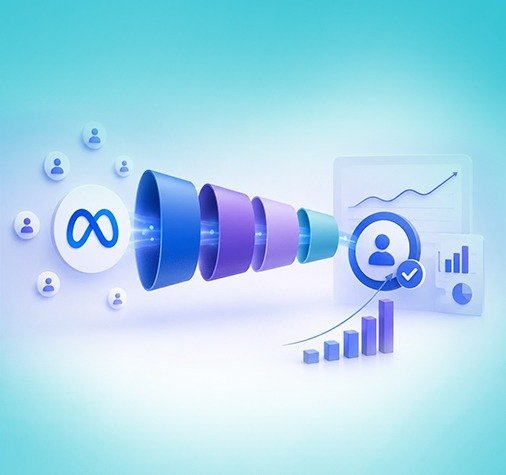
In most cases the ads are not the problem. The problem is that every person sees the same message, whether they have never heard of you or are ready to buy tomorrow. A funnel fixes that. In this post I explain the idea in plain words, with simple steps you can use for your own business.
A funnel is the path a stranger takes to become a customer. People do not go from “who are you?” to “take my money” in one step. They move through stages, and each stage needs a different message. You will often hear three short names for these stages:
Think of a shop. A stranger walking past needs a reason to step in. A customer who is browsing needs answers and proof. A customer at the counter needs an easy way to pay. Your ads should do the same job online.
The goal here is not a sale. The goal is to be seen and remembered by people who could become customers.
What works well at this stage is content that is useful or interesting, not salesy. A short video that answers a common question, a simple tip, or a story about a problem your customer faces. Target by location, age range and interests that match your real customers, and keep the audience large enough for Meta to learn from.
Do not judge these ads by leads. Judge them by whether the right people are watching and visiting your page.
Now you speak to people who watched your videos, visited your website, or engaged with your page. They are interested but not sure. They have doubts: Is this business genuine? Is it worth the price? Will it work for me?
Use this stage to answer those doubts. Good options are customer reviews, short case examples, behind-the-scenes clips, a comparison of your service with common alternatives, and answers to the questions customers ask most. This is where you earn trust, so keep the tone honest and clear.
This is where you show a direct offer to warm people: those who watched most of a video, visited your pricing or service page, or started a form but did not finish. The message is simple: here is what we offer, here is what happens next, and here is how to contact us.
Make the next step easy. A short form, a WhatsApp button or a call button works better than a long page. Add a clear reason to act now, such as a limited slot or a free consultation, but only if it is true.
There is no perfect ratio, and I do not believe in magic numbers. As a starting point, many small businesses put the larger share of the budget on the top and middle stages so the bottom keeps getting fresh warm people, and a smaller share on the bottom. If your business is new and your audience is small, start with one top-stage campaign and one bottom-stage campaign, then add the middle stage once you have some traffic. Review the split every few weeks based on what your numbers show.
Do small businesses really need a full funnel on Meta ads?
Not a complicated one. Even two stages, one to reach new people and one to follow up with warm people, can make a clear difference. Add the middle stage as you grow.
How much should I spend on each funnel stage?
It depends on your business, audience size and goal. Start small, keep the top stage broad enough to learn from, and adjust after a few weeks of data. A consultant can help you set this for your situation, but nobody can promise exact results.
How long does a Meta ads funnel take to work?
Plan on a few weeks to gather data and a few more to improve it. The top and middle stages build warm audiences, so results often become clearer over time rather than on day one.
Every business has a different customer, offer and budget, so the funnel should be built around yours. I help business owners set up the strategy first and then guide them in putting it into action. If you would like to talk it through, book a strategy call at eldhojoy.com.
 November 09, 2026
 November 09, 2026
 November 09, 2026
 November 09, 2026
